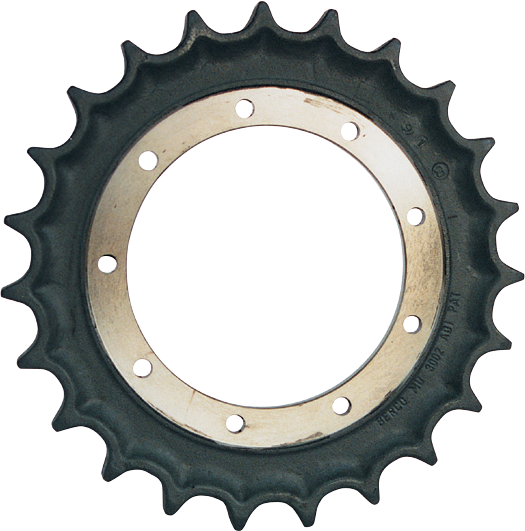
Benefits and Challenges of Manufacturing Chain Sprockets in Austempered Ductile Iron (ADI)
Manufacturing chain sprockets using Austempered Ductile Iron (ADI) brings significant advantages in terms of performance, durability, and cost-effectiveness. However, the process does come with certain challenges. Let's explore both aspects, focusing on ADI’s unique properties and how Castwise Manufacturing from India ensures export-quality castings through rigorous quality control.
Benefits of ADI in Chain Sprockets:
- High Strength and Toughness: ADI offers excellent strength-to-weight ratios, ideal for chain sprockets that experience heavy loads and frequent stress. The austempering process gives ADI superior strength compared to conventional steel, while being lighter, enhancing performance.
- Superior Wear Resistance: The austempering process creates a unique microstructure, significantly boosting wear resistance. Chain sprockets made from ADI last longer, reducing maintenance and operational downtime.
- Noise Reduction and Damping: ADI’s natural damping properties give it a clear advantage over steel, reducing noise and vibration. This is particularly valuable in high-speed or sensitive industrial environments where quieter operation is needed.
- Enhanced Fatigue Strength: ADI sprockets excel under continuous cyclic loading due to their exceptional fatigue strength, allowing them to withstand repetitive forces for longer without failure.
- Cost-Effective Manufacturing: Compared to traditional steel, ADI sprockets are more economical to produce. ADI casting processes simplify production, especially for complex shapes, lowering overall costs.
- Rapid Prototyping: ADI is easier to cast into prototypes than steel, allowing manufacturers like Castwise Manufacturing to quickly develop and test new sprocket designs, speeding up product development timelines.
- Environmentally Friendly Production: ADI production is more energy-efficient than steel, reducing environmental impact. When paired with sustainable sourcing, ADI is an eco-friendly solution for chain sprockets.
Challenges in Manufacturing ADI Chain Sprockets:
- Heat Treatment Control: The austempering process requires precise temperature and timing control. Any deviation can result in inconsistent properties, so stringent quality control is vital to ensure uniform results.
- Machinability: While ADI offers numerous advantages, it can be harder to machine than steel or standard ductile iron. Grades like ADI 4 and 5 have poor machinability, necessitating machining before the austempering process. This adds complexity, but it ensures the final product achieves the desired properties without compromising its surface or mechanical qualities.
- Quality Control: Consistency is key for ADI products. Castwise Manufacturing employs strict quality control measures at every stage, from casting to austempering, to ensure each sprocket meets the highest standards for export-quality castings.
Market Acceptance of ADI Sprockets:
ADI is gaining acceptance in various industries due to its combination of strength, durability, and cost-effectiveness. Many industries, particularly those involved in heavy machinery, agriculture, and automotive sectors, are recognizing ADI's advantages over conventional steel. However, widespread adoption can sometimes face resistance due to the relatively unfamiliar process or cost perception. Through education and proven results, Castwise Manufacturing continues to expand the market for ADI sprockets, ensuring global customers have access to the best material solutions for their applications.
Case Study Insights:
In a study on sustainable sprocket design and production, ADI was found to outperform steel in agricultural applications where high load capacities and environmental exposure were prevalent. The sprockets maintained structural integrity longer, and the improved wear resistance significantly reduced downtime for machinery(
SpringerLink)(ASME Digital Collection). This demonstrates ADI's potential for longer-lasting performance and reduced maintenance costs in heavy-duty industries.
Conclusion:
Austempered Ductile Iron (ADI) is an excellent material for chain sprockets due to its superior strength, wear resistance, and noise reduction properties. While challenges such as precision in heat treatment and machining complexity exist, particularly with higher grades, the overall benefits make ADI a compelling choice for industrial applications. With a focus on export-quality castings from India, Castwise Manufacturing ensures its ADI products meet stringent standards, backed by robust quality control throughout the foundry.