Introduction
- Briefly introduce the importance of bearing systems in railway freight cars.
- Highlight the role of SBX type constant contact side bearings in improving stability and reducing wear on railcars.
- Introduce the concept of using ADI (Austempered Ductile Iron) for manufacturing bearing housings, emphasizing its potential to increase the lifespan, reduce maintenance, and improve overall performance of the bearings.
The Importance of Bearing Housings in Rail Freight Cars
- Explain the function of bearing housings in side bearing systems, focusing on how they provide structural support and protect the bearings from external forces like vibration, temperature variations, and environmental conditions.
- Discuss the traditional materials used for bearing housings, such as cast steel or gray iron, and their limitations.
Why ADI (Austempered Ductile Iron)?
- Material Properties: ADI offers a combination of high strength, wear resistance, and toughness. Discuss how the material is made by a special heat treatment process that converts ductile iron into a high-performance material.
- Benefits Over Traditional Materials:
- Improved Strength and Durability: ADI offers enhanced tensile strength and toughness compared to conventional cast iron, making it ideal for the tough conditions encountered in freight rail transport.
- Wear Resistance: Due to its higher hardness, ADI would significantly reduce the wear on bearing housings, increasing the service life of both the bearing and the housing.
- Cost-Effectiveness: While ADI may have a higher initial cost, its durability can lower maintenance and replacement costs in the long run.
- Fatigue Resistance: ADI's excellent fatigue resistance makes it ideal for the repeated, heavy-duty loads experienced by freight railcars.
Advantages of ADI Bearing Housings for SBX Type Side Bearings
- Improved Operational Efficiency: With ADI's enhanced properties, freight cars can carry heavier loads while maintaining stability, reducing downtime caused by bearing failure.
- Longevity and Maintenance Reduction: ADI's resistance to wear and fatigue means fewer replacements and lower maintenance requirements, contributing to higher operational efficiency for rail operators.
- Environmental Resistance: ADI is resistant to many environmental challenges like corrosion and high-impact forces, improving reliability in extreme weather conditions.
Design Considerations for ADI Bearing Housings
- Weight Optimization: While ADI is strong, it’s also relatively lightweight. This makes it easier to integrate into current freight car designs without significantly increasing overall weight.
- Machining and Processing: Although ADI is tougher to machine compared to traditional materials, advancements in machining technology make it feasible and cost-effective for large-scale production.
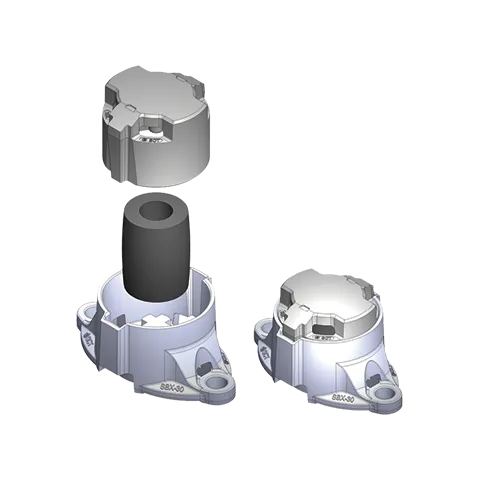
- Compatibility with SBX Type Bearings: Discuss how ADI can be specifically designed to accommodate the unique characteristics of SBX type side bearings (like their vented top cap and elastomeric spring) while maintaining or enhancing the bearing's performance.
Challenges and Considerations
- Cost: While ADI may reduce long-term maintenance costs, its upfront costs could be a challenge for some rail operators.
- Manufacturing Challenges: The process of producing ADI bearing housings requires specific equipment and skilled labor, which may initially limit widespread adoption.
- Compatibility and Integration: Ensuring that ADI bearing housings are designed to be fully compatible with existing SBX type bearings and freight car systems may require engineering adjustments.