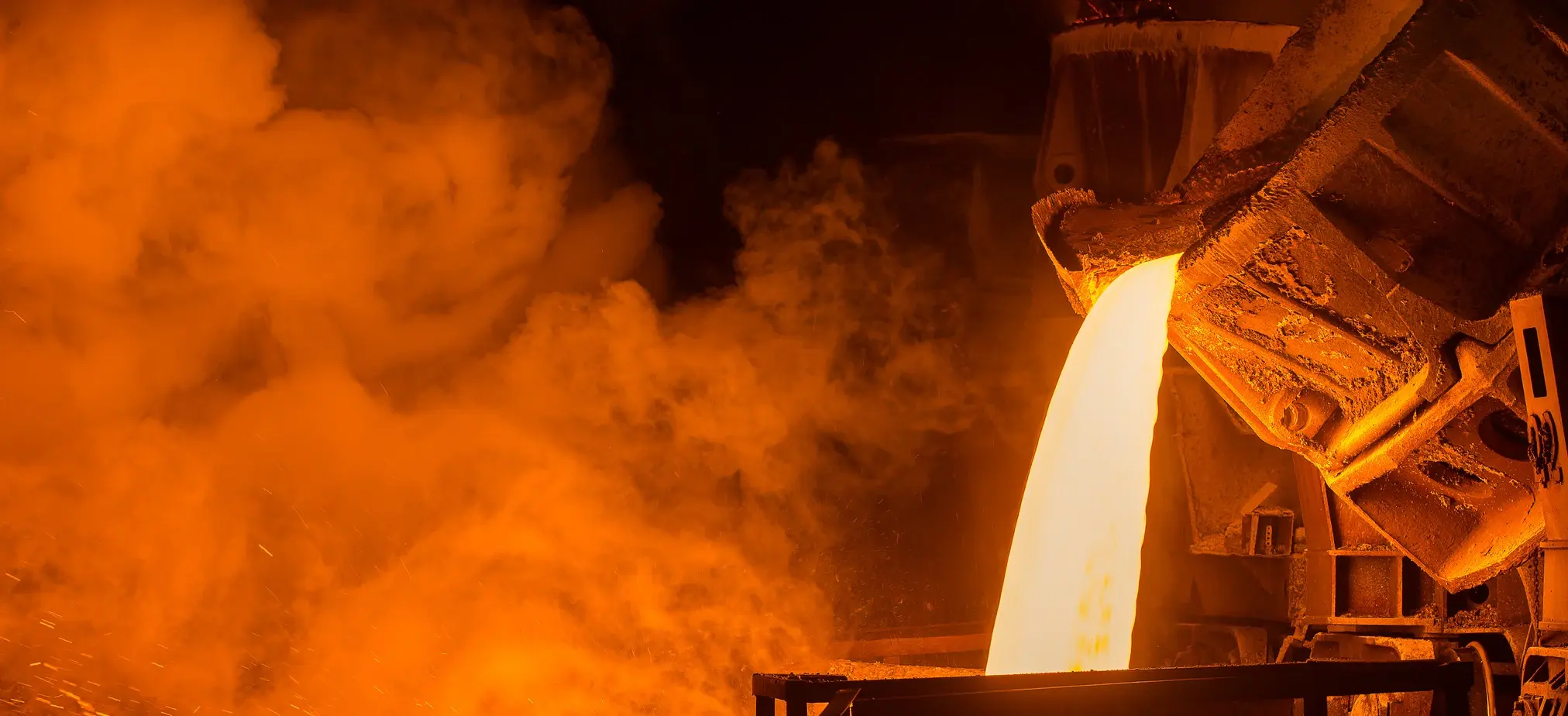
A single material engineered to handle gears, pipes, brackets,aa and pumps under serious load
Factories across industries keep specifying the same grey-green metal for their toughest components, and there's a clear reason why. Ductile iron castings use cases stretch from tractor axles to hydraulic housings. Engineers trust this material when failure simply isn't an option.
Here's where ductile iron actually gets used, why it beats plain cast iron and steel in so many jobs, and what to look for in a manufacturer before you place an order.
What Makes Ductile Iron Different
Ductile iron isn't just cast iron with a new name. Inside it, the graphite forms tiny spheres instead of flakes. That's the whole trick. It's what gives the metal flexibility traditional grey iron never had.
Grey iron snaps under stress. Ductile iron bends. One property, and it changes everything about where the material can be used.
You still get iron's pourability and machinability. But you also get tensile strength and shock resistance that used to mean reaching for steel. Steel costs more. It weighs more in most applications. It often needs extra machining time too. That's the trade-off ductile iron solves, and it's why so many buyers switch once they run the numbers.
Industrial Applications of Ductile Iron Castings
The industrial applications of ductile iron castings span nearly every heavy-manufacturing sector out there. Here's where it shows up most.
Automotive Components
Suspension parts. Differential housings. Brake components and axle housings. All of them lean on ductile iron because it absorbs vibration and road shock without cracking. A part that fails on a highway isn't a minor inconvenience. It's a safety issue. That's exactly why automotive buyers won't settle for anything less than certified material.
Agricultural Machinery
Tillers, plough components, gearbox housings, wear plates. Farm equipment takes a beating from soil, grit and constant load cycles, and ductile iron shrugs it off for years. That durability is a big reason it's become the default answer to ductile iron castings supplier India searches from agri-equipment OEMs.
Hydraulic Systems
Pump housings, valve bodies, cylinder components. These need dimensional precision and pressure resistance at the same time. A casting that's even slightly porous can leak under hydraulic pressure. So in this space, a manufacturer's testing process matters just as much as the material itself.
Utilities and Infrastructure
Manhole covers. Pipe fittings. Water and gas distribution components. All of them rely on ductile iron's corrosion resistance and long underground service life. Honestly, this is one of the oldest and most proven uses of the material anywhere in the world.
General Industrial Equipment
Gearboxes, machine bases, brackets, structural components. Across manufacturing plants, they all lean on the same combination: strength, machinability, and a lower cost than fabricated steel.
Why Manufacturers Choose Ductile Iron Over Alternatives
Here's the honest answer: cost and performance, together. Ductile iron machines faster than steel. It dampens vibration better than aluminum. And it holds up to fatigue loading far longer than standard grey iron. For parts under repeated stress, that fatigue resistance alone can decide the whole sourcing call.
Then there's the weight-to-strength ratio. Think about it this way: a part that needs to be over-engineered in steel to hit a safety margin can often be cast leaner in ductile iron. Same safety margin, less material, lower cost. No corners cut on strength.
What to Look For in a High-Strength Ductile Iron Castings Manufacturer
Not every foundry can back up its claims with process control. Here's what should actually matter when you're sourcing.
Material traceability. Every batch should be tested and documented, not just eyeballed.
In-house machining. A foundry that only casts and ships to a third party for machining adds time, cost and coordination risk to your supply chain.
Certifications that mean something. ISO 9001:2015 and CQI-27 compliance, along with adherence to ASTM, EN and DIN standards, tell you the process is audited, not assumed.
Capacity that matches your project. Whether you need a 2 kg bracket or a 20-tonne structural casting, your supplier needs the range to handle it without subcontracting the hard parts.
Choose Castwise as your Ductile Iron Casting Supplier
At Castwise Manufacturing Company, this is exactly the setup we've built over 30-plus years in the foundry business. Design-to-dispatch, start to finish. That means DFM review, prototyping and tooling, then in-house green sand molding for castings up to 100 kg. Need something bigger? Partner foundries cover components up to 20 tonnes. Add induction melting at 2 x 500 kg batch capacity, and full PPAP documentation before anything ships.
Our 500 MT/month capacity covers ductile iron, grey iron and Austempered Ductile Iron (ADI). In-house VMC and HMC machining. Metallurgical and sand testing labs. Spectrometer analysis, CMM inspection, tensile and hardness testing on every relevant batch. For wear-critical applications, we go further: ASTM A897 ADI grades from 900 to 1600 MPa tensile strength, built for gears, wear plates, mining components and high-load brackets.
FAQs
What industries use ductile iron castings the most? Automotive, agriculture, hydraulics, utilities and general industrial equipment. Simple reason: ductile iron handles repeated stress and shock loading better than most alternatives, at a cost that makes sense.
Is ductile iron stronger than cast iron? Yes, clearly. The nodular graphite structure gives it far better tensile strength and impact resistance than standard grey cast iron. Grey iron is brittle under sudden loads. Ductile iron isn't.
Can ductile iron replace steel components? Often, yes. You get comparable strength with better machinability, usually at a lower total cost. That said, the right call still depends on your specific load and application. Don't skip that step.
What's the difference between ductile iron and ADI? ADI goes through an extra heat treatment step. That single step pushes tensile strength up to 1600 MPa, which is what makes it suitable for the most wear-intensive, high-load parts out there.
Do you supply ductile iron castings from India for export? Yes. Castwise export ductile iron castings from India with full documentation, dimensional reports and certification support built in, ready for international buyers.
Ready to Source Ductile Iron Castings That Actually Hold Up?
Need a high strength ductile iron castings manufacturer with the process control to back it up? Castwise can take your project from drawing to dispatch. Call 9888180008, or reach out through our contact page to discuss your specifications and get a quote.